
Press Release: Teen Swimmer Announces Second Extreme Ocean Crossing to Pressure Government on Shark Protection
Fourteen years after Kane saw his first white shark in Mossel Bay as a wide-eyed five-year-old, he swam the entire bay — 22 kilometres from The Point to Glentana — in the name of sharks.
Mossel Bay, South Africa — A month after completing a gruelling 22km swim across Mossel Bay, 19-year-old endurance swimmer Kane Johnstone has announced an even more strategic second crossing. This time, to span the full proposed Shark Catch Exclusion Zone (SCEZ) and intensify pressure on government decision-makers.
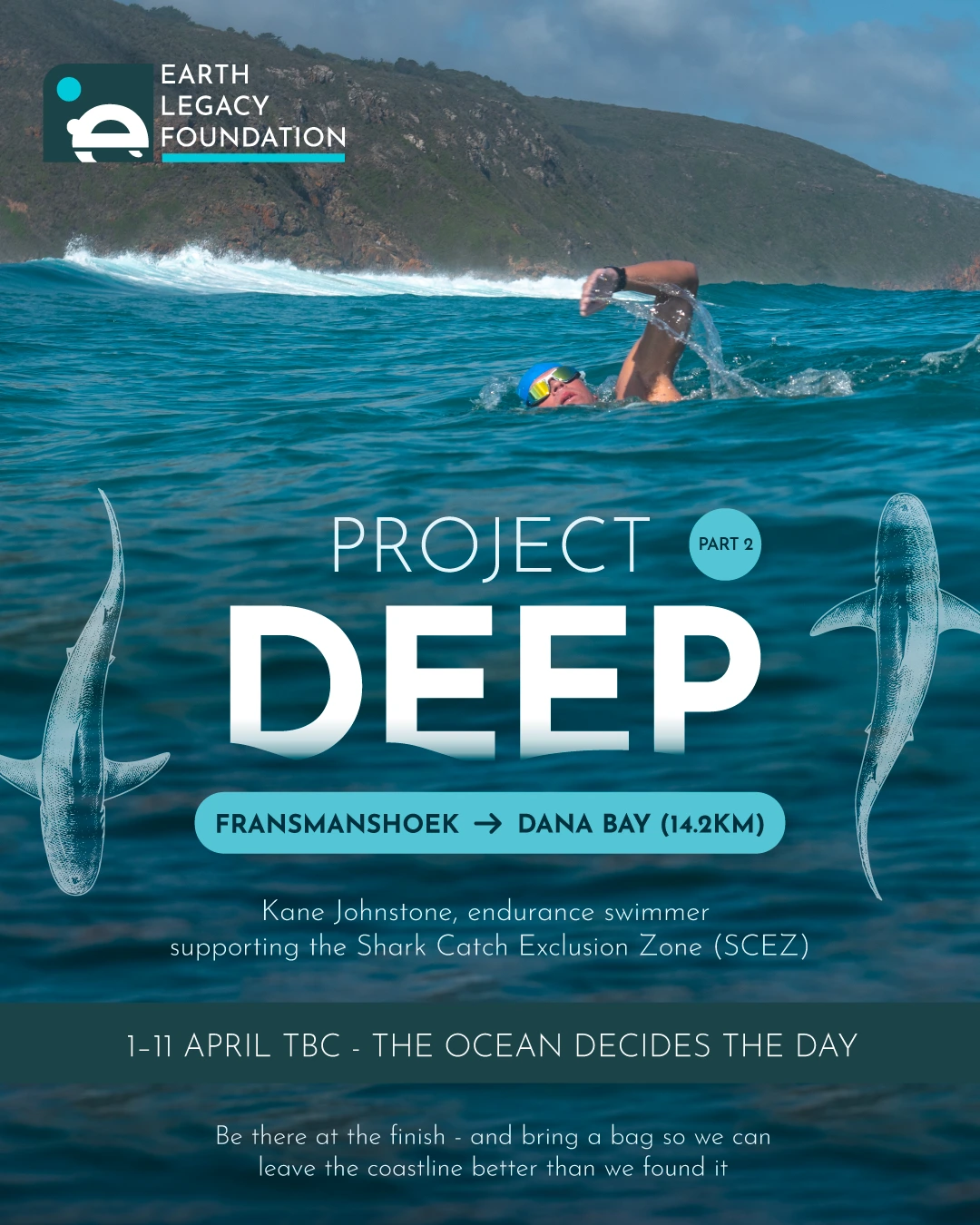
The swim, part of Project DEEP in partnership with Earth Legacy Foundation, will take place within an open weather window from 1–11 April, covering approximately 14.2km from Fransmanshoek to Dana Bay (First Beach).
This route has been deliberately chosen to complete the full length of the proposed exclusion zone — a critical area conservationists are advocating to protect from commercial shark fishing.
“This one means I’ve swum the entire proposed zone,” said Johnstone. “It’s about finishing what we started, and making sure the message lands where it needs to.”
The swim will again be conducted unassisted and in skins, with only a support crew alongside.
The announcement follows a direct response from the Department of Forestry, Fisheries and the Environment (DFFE), which confirmed it will send a delegation to Mossel Bay to discuss marine protection in the area.
For Johnstone, that response has only strengthened his resolve.
“When I heard they were coming to meet, I realised this is bigger than just a swim,” he said. “Now it’s about pushing that momentum forward.”
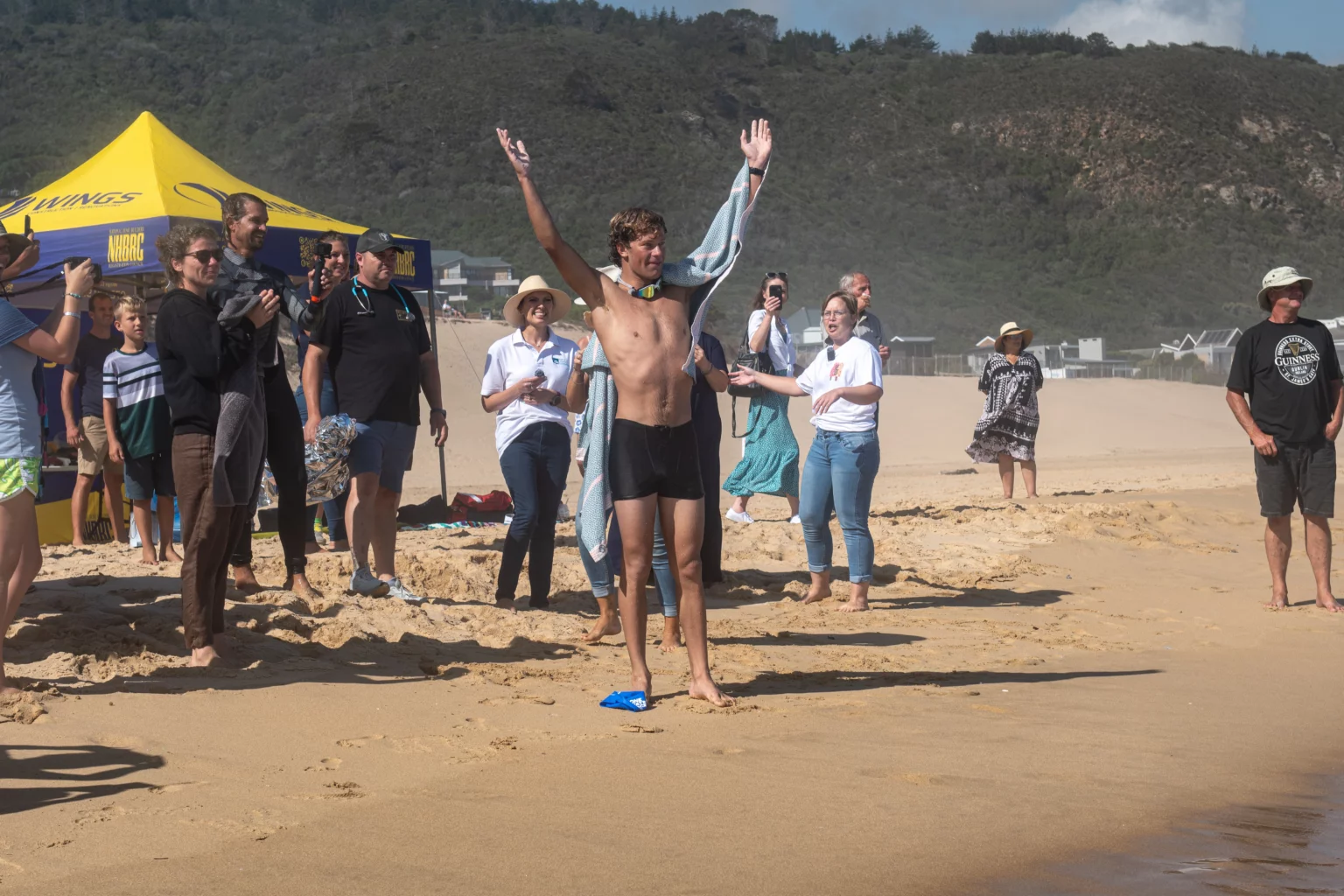
Project DEEP was launched to draw attention to the ecological decline of Mossel Bay’s shark populations, once among the most active in South Africa.
During his first 9.5-hour crossing, Johnstone reported seeing no sharks, rays or fish.
The proposed Shark Catch Exclusion Zone is a localised spatial solution aimed at restricting targeted commercial shark fishing within this key coastal habitat. Conservationists argue that demersal shark longlining, which can remove tens of thousands of sharks annually, with the majority of the catch exported, is placing unsustainable pressure on already vulnerable populations.
Esther Jacobs, Project Director at Earth Legacy Foundation, says the second swim marks a shift from awareness to targeted advocacy.
“Project DEEP has evolved into something far more powerful than a single endurance event,” said Jacobs. “This next swim is a strategic statement, physically connecting the boundaries of the proposed exclusion zone while reinforcing the urgent need for low-economic-impact, high-ecological-impact conservation solutions.”
She added that the timing is critical.
“We now have a window where government is listening. What happens next depends on whether we can maintain public momentum and demonstrate that this is not a fringe issue, it’s a national priority.”
While Johnstone jokes about “lighting a fire under” decision-makers, the campaign itself remains focused on constructive engagement.
The goal: a practical solution that protects sharks, supports tourism, and restores ecological balance.
Following the success of the first crossing, which mobilised local support and drew national media attention, Project DEEP is quickly becoming a symbol of community-driven ocean advocacy in South Africa.
“The team we had for Mossel Bay was unreal,” Johnstone added. “I still get goosebumps thinking about it. This next one is for all of us, and for the ocean.”
Earth Legacy Foundation is committed to protecting Earth’s natural resources and biodiversity for future generations. Through collaboration with local communities and partners, the Foundation tackles pressing environmental issues, like pollution and overexploitation, striving to create a sustainable and conscientious world.
Notes to Editors:
Learn more about the Shark Catch Exclusion Zone campaign:
https://earthlegacyfoundation.org/mossel-bay-shark-catch-exclusion-zone/
Read previous coverage of the swim in The Citizen:
https://www.citizen.co.za/network-news/network-sport/2026/02/20/western-cape-teen-completes-20-5km-open-water-swim/
For media inquiries, interviews, or additional information, please contact:
Lynette Whittaker
Earth Legacy Foundation
Media Director
c: +27 82 670 6700
e: lynette@earthlegacyfoundation.org
w: www.earthlegacyfoundation.org
Photo Credits: Uncapped Photography – Werner van Schalkwyk and Earth Legacy Foundation
More News

Press Release: Teen Swimmer Announces Second Extreme Ocean Crossing to Pressure Government on Shark Protection

Press Release: One Step Closer to Shark Protection After 22km Swim for Sharks Highlights “Eerie Silence” in Mossel Bay

Guest article: Shark Nets Threaten Dolphins

Press Release: South African Coalition Calls for End to Shark Culling in KZN

500 Learners. 50kg of Litter. One Powerful Programme.
