
Guest article: Shark Nets Threaten Dolphins
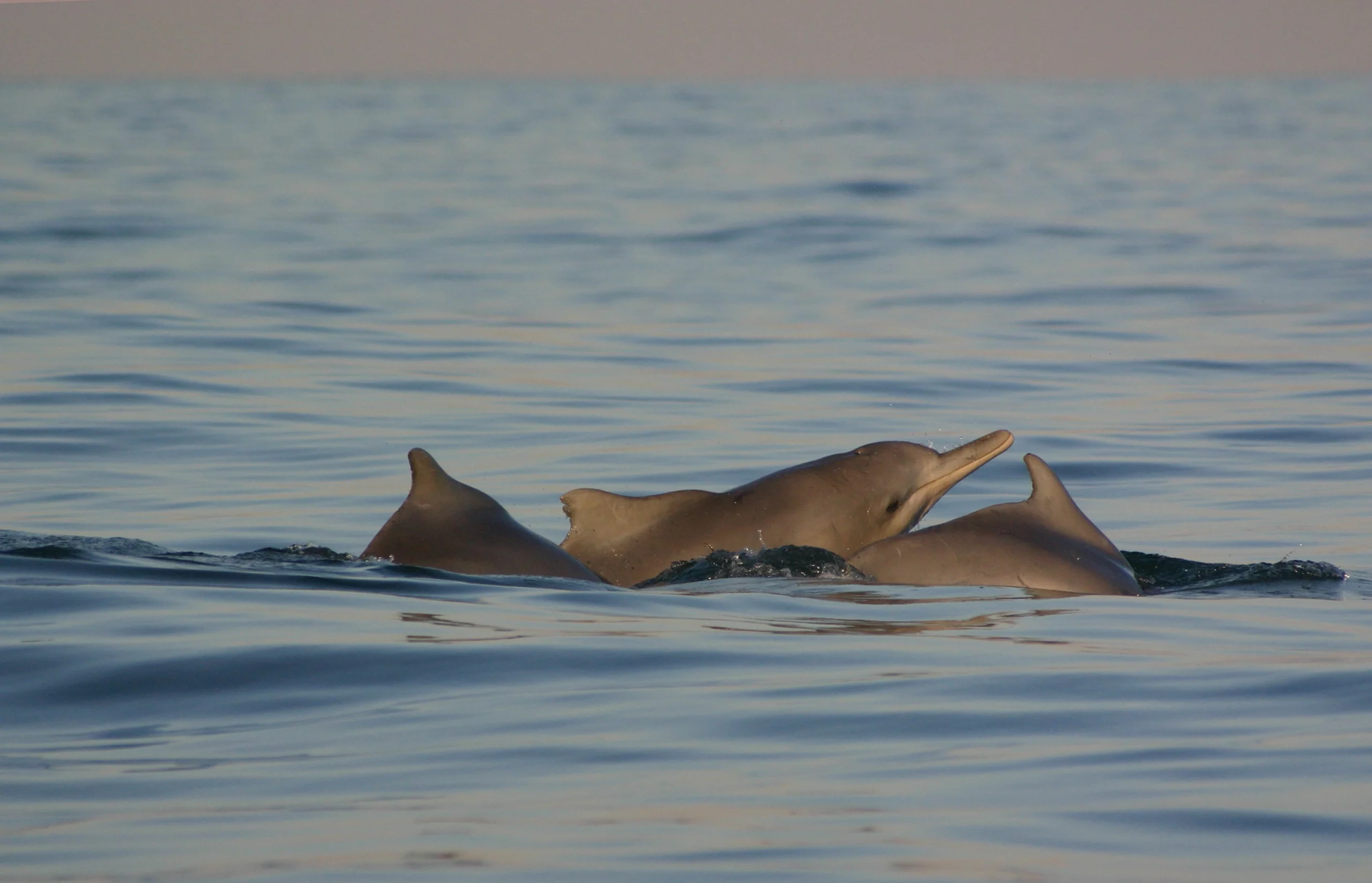
Shark nets have been proposed at Tinley Manor, which is home to a higher density of critically endangered humpback dolphins than surrounding regions.
By Journalist, Kaylan Geekie
Marine scientist Dr Shanan Atkins has raised the alarm over plans to reintroduce shark nets at the new Club Med at Tinley Manor next year, warning that the move could result in the deaths of dolphins as well as sharks.
Atkins, project leader and coordinator of the Indian Ocean Humpback Dolphin Conservation Network, has nearly 30 years’ experience studying dolphins, sharks and the effects of shark nets on marine life. Her PhD, ‘Human-wildlife conflict regarding shark nets at Richards Bay: Seeking solutions,’ explored the ecological and ethical challenges of shark control measures.
“I understand the need to ensure ocean-users are safe, but I don’t think we should purposefully kill sharks and accept many other animal deaths as collateral damage to prevent shark attacks,” said Atkins.
Tinley Manor lies on the southern border of the uThukela Marine Protected Area, home to a higher density of endangered humpback dolphins than surrounding regions. Historical data underscores Atkins’ concern: “When there were nets at Tinley Manor (1978-1993), it was the beach with the third-highest catches per kilometre of net for humpback dolphins. Only Richards Bay and Zinkwazi had higher catch rates,” she said.
According to Atkins’ research, 85% of animals caught in shark nets are non-target species, while 75% die. Dolphins suffer one of the highest mortality rates among all species. KwaZulu-Natal Sharks Board (KZNSB) annual reports show that across the province, the average percentage of dolphins dying in shark nets was 96% between 2013-2017 and 93% between 2018-2022.
KZNSB head of research, Professor Matt Dicken, addressed the issue at a recent public participation process meeting on November 5. He admitted uncertainty about whether an environmental impact assessment will be conducted and said he could not predict exact catch numbers of bycatch.
Dicken estimated that based on Blythedale’s five-year data, about 15 animals per year might be caught: “Not one dolphin was caught in the last five-year period at Blythedale,” said Dicken.
However, KZNSB statistics indicate dolphins have one of the highest death rates among all harmless species caught in nets.
“We can’t accurately say how many animals will be caught, but if you look at Blythedale, it’s similar… I’m pretty sure any scientist that looks at the data will conclude that those numbers will not warrant any ecological harm.”
Atkins disagrees but acknowledges improvements by KZNSB since the 1990s. Measures such as halving net lengths, introducing baited hooks and seasonal adjustments have reduced humpback dolphin deaths from more than six per year in the early 2000s to about two annually.
“I think that many who oppose shark nets don’t realise that the Sharks Board is full of good people working to ensure the safety of residents and visitors,” she added. “Their changes saved about one humpback dolphin every year, which may not sound like a lot but given the dolphin’s endangered status, every animal counts.”
Read more on our campaign page
Main photo credit: Brett Atkins
More News

Press Release: Teen Swimmer Announces Second Extreme Ocean Crossing to Pressure Government on Shark Protection

Press Release: One Step Closer to Shark Protection After 22km Swim for Sharks Highlights “Eerie Silence” in Mossel Bay

Guest article: Shark Nets Threaten Dolphins

Press Release: South African Coalition Calls for End to Shark Culling in KZN

500 Learners. 50kg of Litter. One Powerful Programme.
