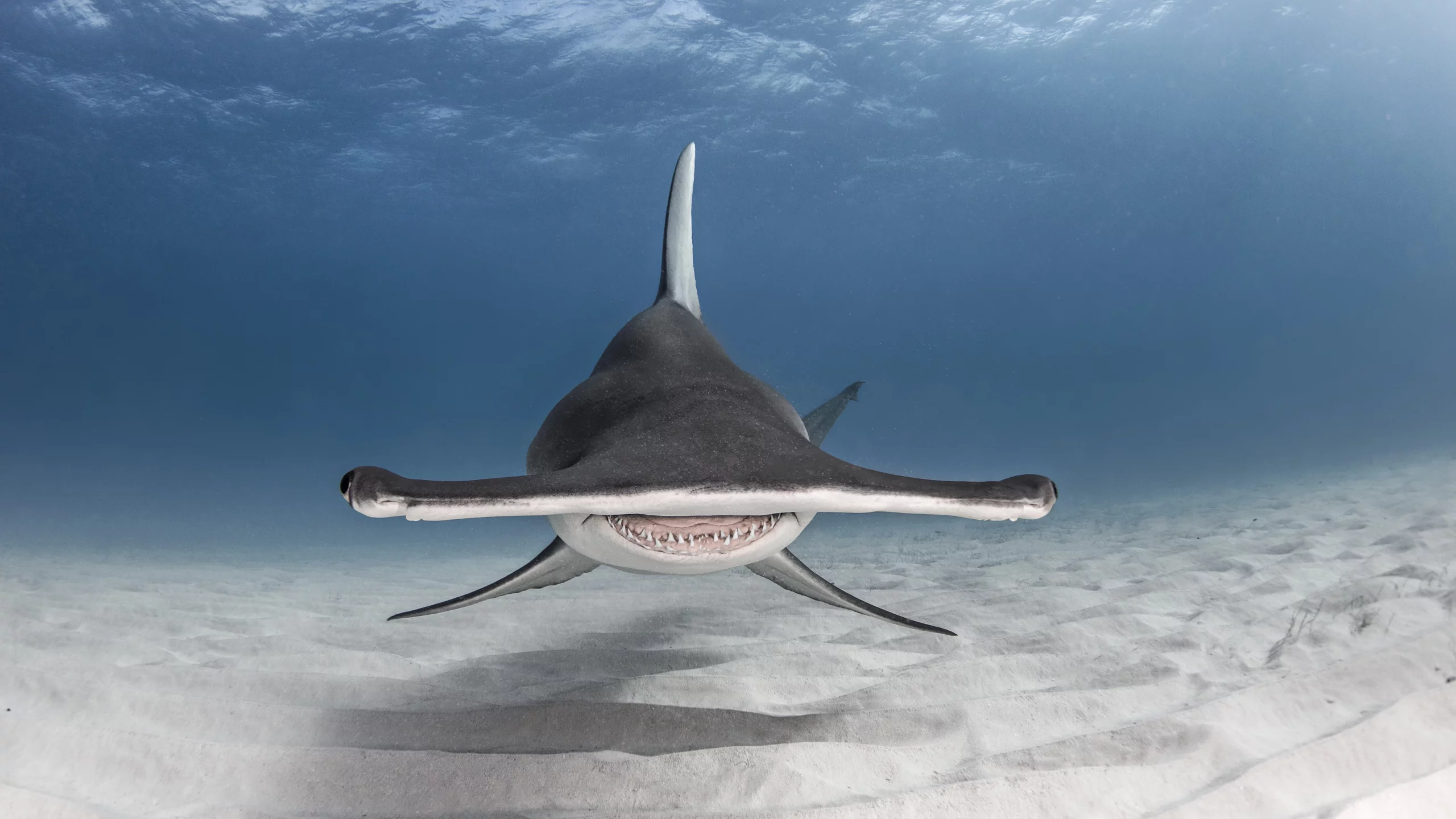
Protect Sharks Where They Matter Most
Just 1.2% of Important Shark and Ray Areas (ISRAs) in the Western Indian Ocean are fully protected within Marine Protected Areas. The proposed Mossel Bay Shark Catch Exclusion Zone offers a low-economic-impact, high-ecological-benefit, and immediately implementable solution in one of South Africa’s most important shark hotspots.
The Problem
Mossel Bay is one of South Africa’s most important shark aggregation areas, supporting scientific research, dive tourism, marine education, and ocean-based livelihoods. Yet the same waters used by tourism and research vessels are also exposed to targeted commercial shark fishing by the demersal shark longline fishery operating in close proximity to key shark activity areas.
The proposed Shark Catch Exclusion Zone (SCEZ) would establish a defined spatial buffer restricting targeted shark fishing in critical aggregation areas — a practical management approach already proven through the gazetted Dyer Island SCEZ established in 2021.
The Mossel Bay SCEZ proposal is currently being progressed through the Department of Forestry, Fisheries and the Environment (DFFE). This campaign aims to build awareness and stakeholder support to help advance the process.

The Urgency
White shark sightings in Mossel Bay have declined significantly in recent years, while bronze whaler sharks, now supporting local cage diving and research, are increasingly exposed to targeted demersal shark longline fishing operating in the same waters. At the same time, vessels such as demersal shark longliner, Zanette, continue to operate in close proximity to known shark aggregation areas, increasing pressure on species already under regional ecological stress.
Without timely spatial protection, Mossel Bay risks repeating the trajectory already observed in other historic shark hotspots: declining sightings, weakened tourism value, and long-term ecosystem disruption. Establishing a Shark Catch Exclusion Zone now offers a proactive, science-aligned intervention while populations and tourism value can still be stabilised.
Key Facts
- Mossel Bay supports important shark aggregation areas used for research, ecotourism, and marine education.
- Demersal shark longline vessels legally target species such as bronze whaler sharks in the same operational areas used by tourism and research vessels.
- Much of the shark catch is exported, meaning limited long-term economic benefit remains in South Africa while ecological impacts are felt locally.
- The Dyer Island Shark Catch Exclusion Zone, gazetted in 2021, demonstrated that spatial management solutions can successfully balance conservation and fisheries interests.
- Similar spatial protection in Mossel Bay would reduce direct conflict between shark tourism, research operations, and targeted shark fishing.

The Solutions
The proposed Mossel Bay Shark Catch Exclusion Zone would:
- Establish a clearly defined spatial buffer where targeted shark fishing is restricted.
- Protect key shark aggregation areas that support research, marine education, and tourism activities.
- Reduce operational conflict between commercial fisheries and marine tourism operators.
- Support long-term ecological stability by allowing local shark populations to remain functional components of the ecosystem.
- Demonstrate South Africa’s continued leadership in pragmatic, science-based shark conservation policy.
Spatial management solutions such as SCEZs do not require blanket fishing bans; instead, they provide targeted, practical measures that allow fisheries to operate while safeguarding areas where the ecological and socio-economic value of living sharks is highest.
How You Can Support
Public awareness and stakeholder support play a critical role in advancing conservation policy. You can support the Mossel Bay SCEZ campaign by:
- Sharing campaign information with your networks and local communities.
- Supporting ocean conservation initiatives that protect sharks and marine ecosystems.
- Following and engaging with our Too Rare To Catch campaign, which highlights the urgent need to protect vulnerable shark species through science-based management solutions.
Project DEEP — Awareness Through Action
The Swim
Project DEEP is a youth-led ocean awareness initiative by Kane Johnstone, an Earth Legacy Foundation ambassador and endurance athlete. In February 2026, Kane successfully completed the first recorded solo swim across Mossel Bay, covering approximately 20.5 km (23 km tracked) from Mossel Bay Point to Glentana.
The crossing was designed to draw public attention to the urgent need for stronger protection of coastal ecosystems and the species — including sharks and rays — that sustain them. Over more than nine hours in the water, in what has historically been one of South Africa’s most recognised shark hotspots, the absence of shark sightings became a powerful message in itself.
Project DEEP marks the first of a series of endurance-based ocean advocacy initiatives, using human challenge to spotlight marine conservation realities.
Conservation Purpose
The initiative aims to:
- Raise awareness for the Mossel Bay Shark Catch Exclusion Zone (SCEZ)
- Highlight the ecological importance of apex predators in maintaining healthy marine ecosystems
- Support ongoing ocean conservation and education programmes working to protect South Africa’s coastal biodiversity
A Community-Driven Message
The swim represents growing public momentum behind practical, science-informed spatial protection solutions. It also demonstrates how local communities, ocean users, businesses, and conservation organisations can collaborate to safeguard South Africa’s marine heritage.
Project DEEP is not a one-off event. It is the beginning of a broader advocacy journey. Further campaigns, awareness activations, and endurance initiatives will continue as part of the ongoing effort to secure meaningful protection for Mossel Bay’s shark habitat.

Next Steps
The Mossel Bay Shark Catch Exclusion Zone proposal remains under review within the Department of Forestry, Fisheries and the Environment, involving both Fisheries Management and Oceans & Coasts branches. While this process is ongoing, administrative timelines have resulted in slow progress as the proposal moves between departments.
Earth Legacy Foundation and collaborating stakeholders continue to engage constructively with government processes, provide technical input where requested, and advocate for practical spatial management solutions that protect South Africa’s marine biodiversity while supporting sustainable ocean-based livelihoods.
Protecting sharks in the places where they matter most is one of the most practical and achievable conservation actions available today. With continued collaboration between scientists, communities, policymakers, and ocean users, the Mossel Bay Shark Catch Exclusion Zone can become another successful example of South Africa leading the way in pragmatic shark conservation.